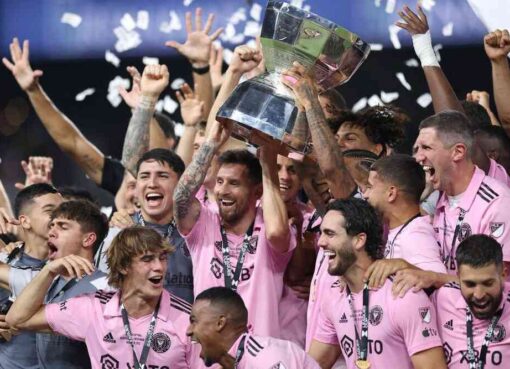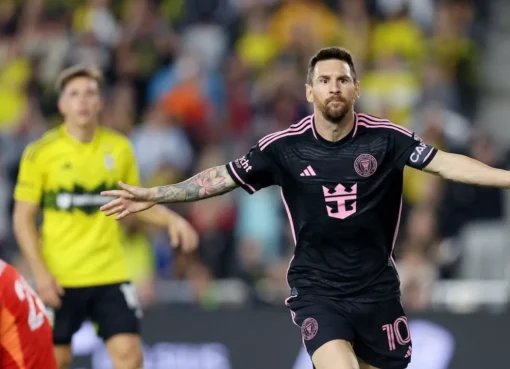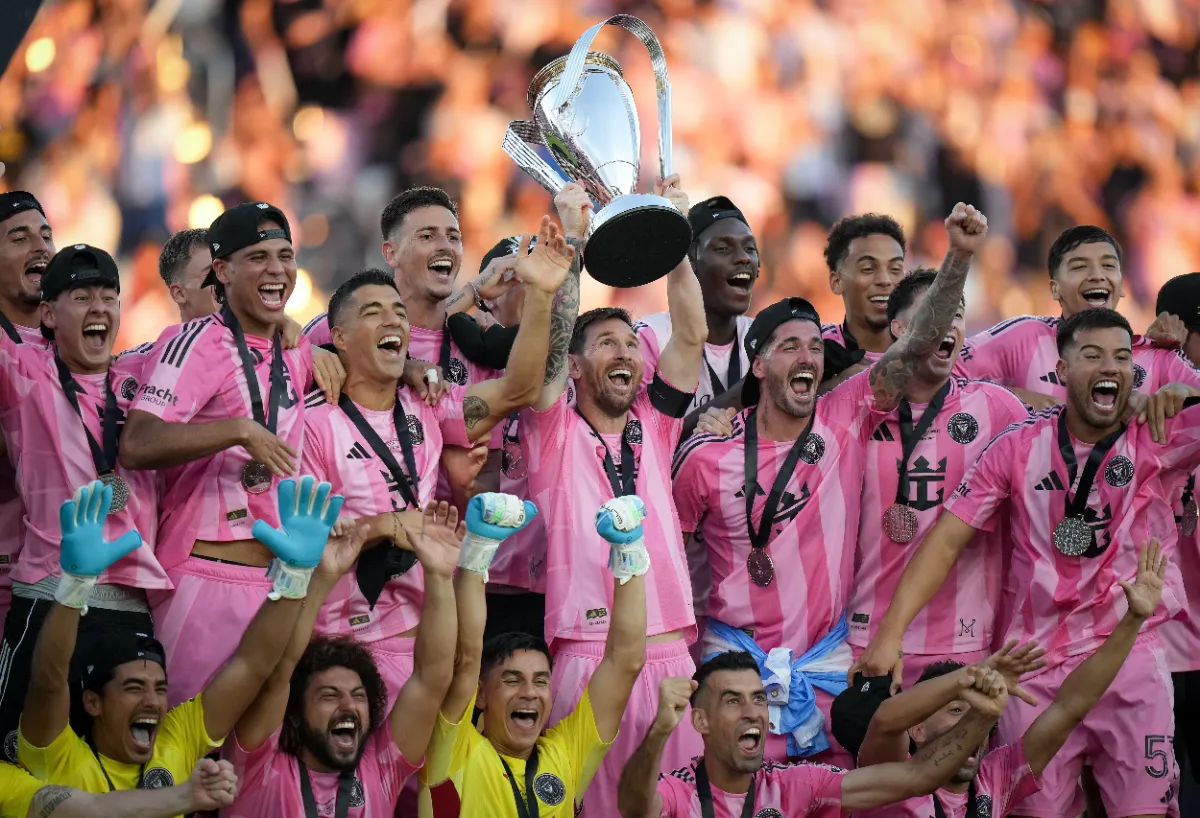
In a historic finale at Chase Stadium in Fort Lauderdale on December 6, 2025, Inter Miami CF finally captured the crown they had long chased — winning their first-ever MLS Cup by defeating Vancouver Whitecaps FC 3–1. What made the day unforgettable was the brilliance of Lionel Messi, whose vision and composure sparked all three Miami goals and delivered a long-awaited breakthrough for the club.
A Final to Remember: Match Unfolded
The match began in dramatic fashion for Miami. Just eight minutes in, a low cross from the right flank was met by a misguided deflection from a Vancouver defender, resulting in a fortuitous own goal that put the home side 1–0 ahead. While the goal wasn’t credited directly to Messi, it followed a sequence involving his movement and pressure near the box that unsettled Vancouver’s defence.
For much of the first half, Miami held the lead under growing tension. But after the break, Vancouver pressed hard — and their persistence paid off in the 60th minute. Midfielder Ali Ahmed drove into the box and fired a low shot past Miami’s keeper to bring the Whitecaps level. Suddenly the final looked open again.
That equilibrium lasted just over ten minutes. In the 71st minute, Messi — always a threat — pounced on a loose touch by a Vancouver midfielder, lofted a precise through-pass into the penalty area, and picked out Argentine teammate Rodrigo De Paul. De Paul needed only one touch to steer the ball past the goalkeeper and restore Miami’s lead. The stadium erupted — the goal looked destined to decide the Cup.
But Miami weren’t done. In the dying moments of stoppage time, Messi again exploited a Whitecaps defensive lapse, this time threading a sublime pass to Tadeo Allende. Allende slotted home calmly, and with that — at 3–1 — the Cup was theirs. Even as Vancouver had outshot Miami overall, they simply couldn’t match Miami’s ruthlessness in key moments.
Messi Magic and a Club’s Redemption
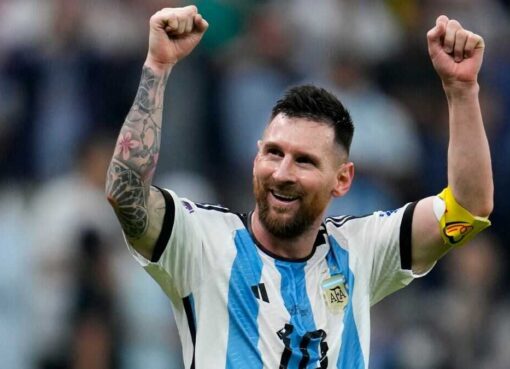
If Hollywood demanded a final with drama, skill and heartbreak — this delivered. For Messi, the match underlined why he’s widely regarded as one of the greatest. He didn’t score, but he orchestrated the victory — directly creating the winning goal and sealing the triumph with another assist. For that, he was deservedly named MLS Cup Most Valuable Player.
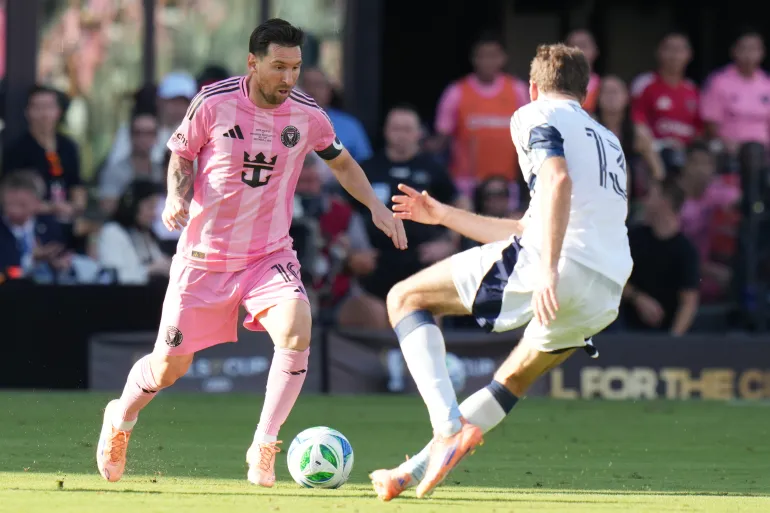
For the club, it’s a milestone. Founded only a few years ago, a franchise still building identity — yet now crowned champions of Major League Soccer. The pink-clad fans in Fort Lauderdale, many wearing Messi’s iconic No. 10, finally had a trophy to celebrate. As confetti rained and players embraced, Miami had cemented itself as legitimate power — not just a glam experiment, but a serious force.
End of an Era — and a New Beginning
The Cup win was more than a single victory. It served as a fitting farewell for veteran stalwarts Sergio Busquets and Jordi Alba, whose illustrious careers in Europe seemed a world apart from American soccer — and yet they leave Miami as champions. The emotional gravity of their final match resonated far beyond the pitch.
At the same time, the triumph represents a new chapter. With young talents, global stars, and a club vision finally coming together, Inter Miami’s future feels much brighter. What once looked like ambition and hype has delivered concrete success.
What This Means — And What Comes Next
- For Messi, the victory adds another glittering trophy to a career already overflowing with honours. But more than that — it proves that even in a league often underestimated globally, he can still shape history.
- For Inter Miami, the win is validation: a reward for investment, ambition, and a willingness to dream big. The MLS Cup transforms the narrative — from “project club” to “champion”.
- For MLS as a whole, this underlines the league’s growing competitiveness and appeal. A relatively young club, a global superstar, and a thrilling final — it’s exactly the kind of story that raises the league’s profile.
- For fans and neutrals alike, it’s a reminder that soccer in America is growing up — and that greatness can still emerge, even far from football’s traditional power centres.
In the end, the 2025 MLS Cup Final wasn’t just a final. It was a statement. With Messi at the heart of it — guiding, creating, inspiring — Inter Miami didn’t just win a trophy. They announced themselves.