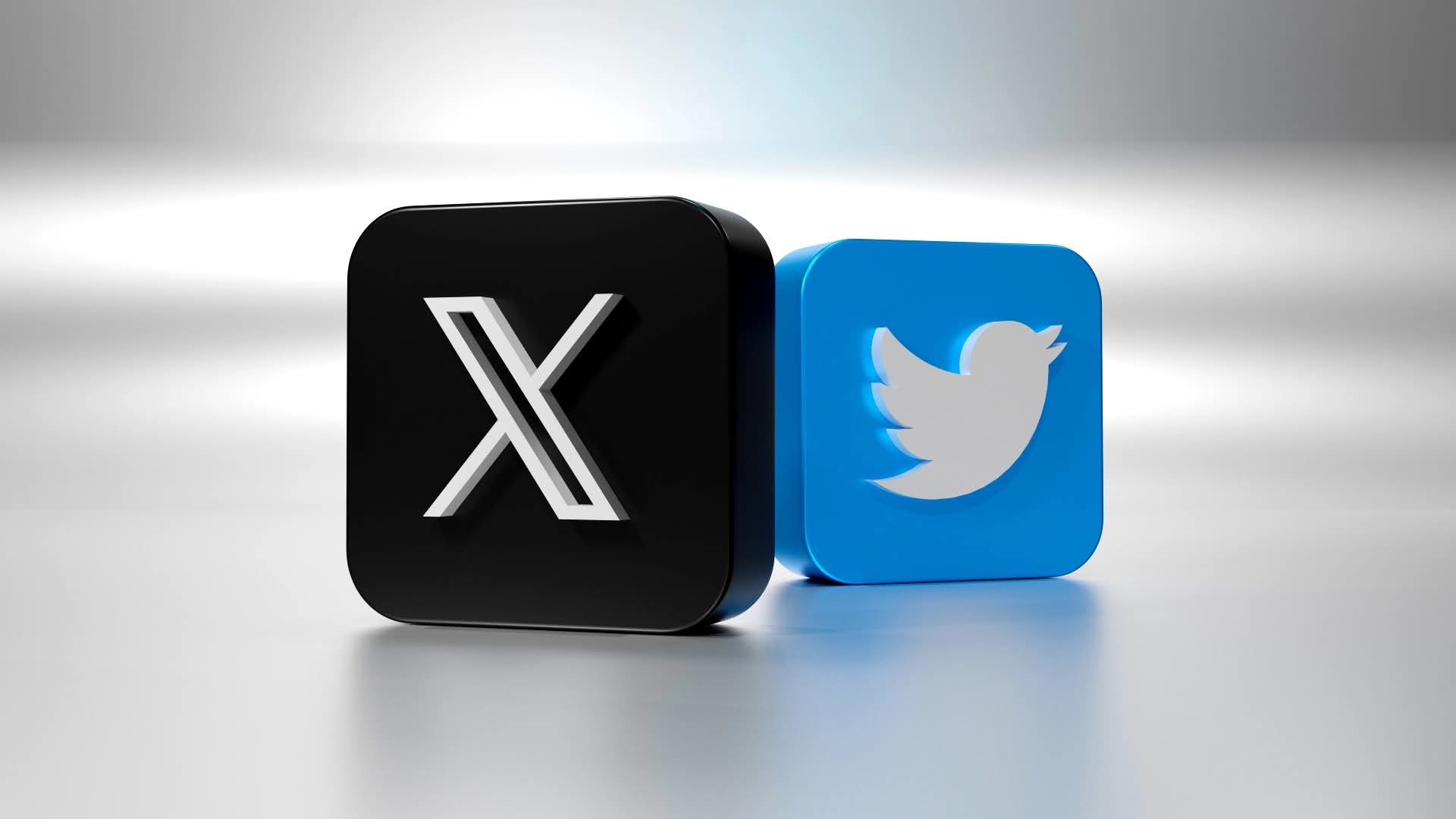
In July 2023, Elon Musk did something that would have sounded absurd just a few years earlier: he killed the name Twitter.
The blue bird disappeared. The word “Twitter” began disappearing. “Tweet” was replaced by “post.” The familiar identity that had been built over more than a decade was replaced with a single letter: X.
Musk had a grand vision. Twitter was no longer supposed to be merely a social-media platform. He wanted X to become an “everything app”—a platform for social networking, payments, video, messaging, and much more.
But there was one enormous problem.
Twitter was already an extraordinarily powerful brand.
So the question is not whether X can eventually become successful. The more interesting question is:
Was turning Twitter into X one of the worst rebranding decisions in corporate history?
The answer may very well be yes.
Twitter wasn’t just a name
Most companies spend years trying to make their names mean something.
Twitter didn’t have to.
The word had become part of everyday language.
People didn’t simply use Twitter. They tweeted. A post was a tweet. A person who used the platform was a Twitter user. A rapidly spreading story went viral on Twitter. Journalists, politicians, celebrities, athletes and ordinary users all understood what “Twitter” meant without explanation.
That is an extraordinarily valuable position for a brand.
In fact, Twitter had achieved something that most companies can only dream about: its brand name had effectively become a verb.
And then the company decided to throw it away.
When Musk announced the change in July 2023, analysts and brand agencies estimated that abandoning the Twitter name could destroy somewhere between $4 billion and $20 billion in brand value.
That alone makes the decision remarkable.
The blue bird was one of the world’s most recognizable logos
The problem wasn’t only the name.
It was the bird.
Twitter’s blue bird was simple, friendly and instantly recognizable. It had been associated with the platform since its early years, with the familiar version of the logo introduced in 2012.
Then, almost overnight, it was replaced by a black-and-white X.
The contrast could hardly have been greater.
The bird suggested communication, movement, lightness and conversation.
The X suggested… well, almost anything.
An X can represent a mathematical variable. It can mean a kiss. It can mark a location. It can represent something unknown. It can also look like the button you press when you want to close or exit something.
One design expert interviewed by TIME argued that the new logo lacked the distinctive personality of the old bird and described it as cold and pointy. The original bird, by contrast, had been carefully designed to remain recognizable even at very small sizes.
That distinction matters.
A good logo doesn’t merely identify a company. It creates an emotional association with it.
The Twitter bird had that association.
The X had to start from almost nothing.
And what exactly is “X”?
This may be the biggest branding problem of all.
“Twitter” tells you something.
“X” doesn’t.
Imagine someone telling you:
“I’m going to post something on X.”
What is X?
A social network?
A messaging service?
A website?
A software company?
A pornographic website?
A cryptocurrency?
A mathematical concept?
A former Twitter account?
The letter X is already used by thousands of companies, products and organizations.
The word is extraordinarily difficult to own in people’s minds.
Twitter, however, was different.
If someone said “Twitter,” there was almost no ambiguity.
That is the essence of strong branding: the name immediately points to one thing.
When “X” sounds like a pornographic website
There is another problem with the name that is difficult to ignore.
For a significant number of people, the letter X has a long-established association with sexually explicit or adult content.
Think about expressions such as “X-rated,” “XXX,” or “adult content.” Long before Twitter became X, the letter X had already acquired a cultural meaning that had little to do with social networking.
That creates an awkward situation for a mainstream social-media platform.
Imagine someone who has never heard of the rebrand being told:
“You can find me on X.”
Their first thought may not necessarily be a social network.
They might think of an adult website.
Even the visual identity can reinforce that association. The stark black-and-white X is radically different from Twitter’s friendly blue bird, which had no such ambiguity.
Of course, X is not a pornography website, and the company itself has positioned X as a broad social and technology platform. But branding isn’t determined entirely by what a company says its name means. People bring their existing associations with a word or symbol to the brand.
And “X” comes with a lot of baggage.
This is particularly problematic because Twitter had achieved almost the opposite. The word Twitter was unmistakably associated with one particular platform. There was virtually no question about what someone meant when they said, “I saw it on Twitter.”
With X, context suddenly becomes necessary.
If someone says, “I saw it on X,” you know what they mean only if you already know that Twitter changed its name.
That may seem like a small inconvenience, but for a global consumer brand, instant recognition is enormously valuable.
Twitter had it.
X has to earn it.
Twitter had built an entire vocabulary
This is where the rebranding becomes particularly strange.
Twitter hadn’t merely created a brand. It had created a language.
“Tweet.”
“Retweet.”
“Twitter thread.”
“Twitterati.”
“Tweetstorm.”
“Twitterverse.”
Even people who never used Twitter understood many of these expressions.
The platform’s name had become embedded in journalism and popular culture.
Changing the name therefore wasn’t like changing the logo of a company that sells refrigerators.
It meant dismantling an entire vocabulary.
Musk eventually moved toward calling tweets “posts.” Retweets became “reposts.” The platform could technically continue functioning, but the cultural language surrounding it had been deliberately discarded.
That is an enormous amount of accumulated brand equity to abandon.
Rebranding usually solves a problem
There is nothing inherently wrong with rebranding.
Companies rebrand all the time.
Sometimes they need to.
A company may have an outdated image. It may enter a new market. It may merge with another company. Its name may no longer represent what it does.
A successful rebrand usually answers a question:
Why should we change?
In Musk’s case, there was an answer: Twitter was supposed to become something much larger than a social network.
The ambition was to transform it into an “everything app,” a concept influenced by platforms such as WeChat that combine social networking, payments, messaging and other services.
That is a legitimate strategic argument.
But there was another question:
Did Twitter need to be destroyed in order to achieve that goal?
That is much harder to answer.
A company can expand its services without necessarily abandoning its strongest consumer brand.
The biggest mistake may have been the speed
Even if Musk’s ultimate vision was correct, the execution was extraordinary.
Twitter was announced as X and the famous bird was replaced almost immediately.
There was no lengthy transition.
No carefully constructed “Twitter is becoming X” campaign.
No years-long period in which consumers gradually became comfortable with the new identity.
The change was abrupt.
Even the company’s headquarters became a symbol of the chaos. The Twitter sign was partially dismantled after the rebranding announcement, leaving a bizarre-looking remnant of the old name on the building.
For a $44 billion acquisition, it looked remarkably improvised.
Branding normally rewards consistency, repetition and familiarity.
The Twitter-to-X transition seemed to embrace disruption instead.
The new name also created a communication problem
There is another subtle problem with the rebrand.
When people continued calling the platform Twitter, they were effectively rejecting the new brand.
Even years later, headlines and articles routinely had to explain:
“X, formerly known as Twitter.”
That phrase itself became evidence of the problem.
A successful rebrand should eventually make the old name unnecessary.
When a company is still commonly described by its former name, the rebrand has not completely replaced the original mental association.
Creative professionals noticed this problem early. A year after the change, branding observers were still describing the platform as “X, formerly known as Twitter,” suggesting that the old identity remained deeply embedded in public consciousness.
The numbers make the decision look even worse
The brand-value story became increasingly uncomfortable.
Brand Finance valued Twitter’s brand at $5.7 billion in January 2022.
That figure fell to approximately $3.9 billion in 2023, and by 2024 the value attributed to the X brand had plunged to roughly $673 million.
Brand Finance also reported a significant decline in the brand’s strength score and said X dropped out of its global media brand rankings.
Brand value is not the same thing as the company’s overall financial value, and many factors besides the name contributed to the decline.
That distinction is important.
The fall cannot simply be summarized as:
Twitter became X → brand value fell → therefore the name caused everything.
The platform was simultaneously undergoing massive changes in ownership, management, moderation, verification, advertising, staffing and business strategy.
But the numbers nevertheless illustrate something important:
The Twitter name was an asset.
And the company voluntarily gave up that asset.
What about the “everything app” argument?
This is the strongest defense of the rebrand.
If Musk successfully turns X into a platform where people communicate, watch videos, make payments, shop, conduct financial transactions and perform many other activities, perhaps “Twitter” would eventually have become too restrictive.
You don’t necessarily want to call your global financial super-app “Twitter.”
The name sounds tied to short messages.
X, on the other hand, is broad enough to encompass almost anything.
From that perspective, the rebrand makes strategic sense.
The problem is that future potential does not erase present brand equity.
It is possible to build a new identity while preserving the old one.
For example, the company could have positioned Twitter as the social layer of a broader X ecosystem.
Instead, it essentially chose to destroy the old consumer identity first and hope the new one would become valuable later.
That is an enormous gamble.
The rebrand also confused the product’s identity
Twitter had a clear proposition:
A place where the world talks in real time.
It was particularly valuable for breaking news, live events, politics, sports, journalism and public conversation.
X is much harder to define.
Is it a social network?
A video platform?
A news platform?
A creator platform?
A payment platform?
A messaging platform?
An “everything app”?
The broader the ambition becomes, the more difficult it can become to explain what the brand actually stands for.
A great brand can represent many products, but it still needs a recognizable central idea.
Twitter had one.
X is still searching for one.
Was Twitter perfect? Absolutely not.
It is important not to romanticize the old Twitter.
The platform had serious problems before Musk bought it.
It struggled with harassment, bots, misinformation, moderation controversies, advertiser concerns and an unclear long-term business model.
Musk did not invent every problem Twitter had.
He inherited many of them.
And changing the company’s direction was not inherently unreasonable.
In fact, some changes made under Musk may ultimately prove valuable.
The question is specifically about the rebranding.
And rebranding should be judged separately from every other decision made by the owner.
A struggling company can need a transformation without necessarily needing to destroy its most recognizable brand.
There have been bad rebrands before
Calling X’s transformation the “worst rebranding ever” is deliberately provocative because there have been plenty of famous branding disasters.
Tropicana’s 2009 packaging redesign is often cited as a classic example of a company changing a familiar identity and then reversing course after customer backlash.
Gap famously introduced a new logo in 2010 and abandoned it within days.
Other companies have changed names, logos or identities in ways that confused customers or destroyed valuable associations.
But Twitter’s case is unusual for one reason:
The company didn’t merely redesign the brand. It abandoned an exceptionally strong brand name, a globally recognized logo and an entire vocabulary at the same time.
That combination makes the case extraordinary.
Perhaps the most valuable thing Twitter had was familiarity
Consider what Twitter had before the rebrand:
- A globally recognized name
- A globally recognized logo
- A unique brand vocabulary
- A massive archive of cultural history
- Strong associations with breaking news and public conversation
- A name understood across languages and countries
- A verb derived from the brand itself
- Millions of people who already knew exactly what Twitter was
Then consider what X had to replace it with:
- A single letter
- A generic-looking symbol
- A name shared by countless other things
- Little emotional connection to the platform
- No established verb
- No established cultural vocabulary
From a pure branding perspective, the trade looks astonishing.
The ultimate irony
Perhaps the most ironic part is that Musk bought Twitter precisely because it was so influential.
He paid $44 billion for the company.
He wasn’t buying an obscure website with no identity.
He was buying Twitter.
The name itself was part of what he acquired.
And less than a year later, one of the world’s most recognizable internet brands had effectively been erased from the consumer-facing identity.
It is difficult to imagine many other acquisitions where the buyer would spend tens of billions of dollars to obtain a famous brand and then almost immediately decide that the brand itself was no longer worth keeping.
So, is X really the worst rebranding in history?
Maybe not.
“Worst ever” is impossible to prove objectively.
Branding isn’t mathematics, and X could still become enormously successful.
If Musk eventually succeeds in turning X into a genuinely useful everything app, today’s criticism could look premature.
But judged purely as a rebranding exercise, the Twitter-to-X transformation has an unusually strong case for the title.
It discarded an iconic name.
It discarded an iconic logo.
It discarded a unique vocabulary.
It confused consumers.
It created a generic and ambiguous new name.
It did so with remarkably little transition.
And, according to Brand Finance, the brand’s estimated value subsequently fell from billions of dollars to hundreds of millions.
Perhaps most importantly, the rebrand failed to answer the simplest question a brand should answer:
Why should I call this X instead of Twitter?
The answer appears to be that Elon Musk wanted X to become something different.
That may be a perfectly reasonable business ambition.
But destroying a great brand is not the same thing as building a great new one.
Twitter spent more than 15 years teaching the world what its name meant.
X inherited the company—but not the meaning.
And that may ultimately be the greatest branding mistake of all.
Twitter was a brand. X is still a promise.
Whether that promise becomes more valuable than what was thrown away remains one of the most fascinating experiments in modern corporate branding.