Cloudflare’s new CMS, EmDash, arrives with a deliberately provocative label: a “spiritual successor” to WordPress. That framing is less about replacement and more about direction. Because EmDash isn’t trying to out-WordPress WordPress—it’s trying to redefine what a CMS should look like in an AI-native, serverless world.
And that distinction matters.
A CMS Built for a Different Internet
WordPress dominates today’s web, powering over 40% of sites. But its architecture reflects assumptions from nearly 25 years ago—long before serverless computing, edge infrastructure, or AI-assisted development were even imaginable.
EmDash starts from a different premise: what if you rebuilt a CMS from scratch for today’s conditions?
The result is a system written entirely in TypeScript, designed to run on serverless infrastructure like Cloudflare Workers, and structured around modern frontend tooling like Astro.
This isn’t incremental improvement. It’s a reset.
Fixing WordPress’s Most Persistent Weakness
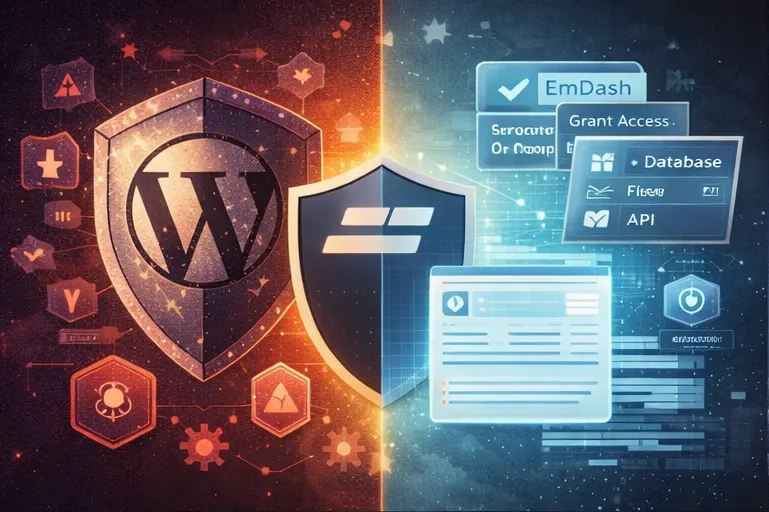
At the core of EmDash is a direct response to WordPress’s biggest long-term issue: plugin security.
In WordPress, plugins run with broad, often unrestricted access to the system—database, filesystem, and all. That flexibility fueled its ecosystem, but it also created a massive attack surface. Cloudflare claims the vast majority of WordPress vulnerabilities originate here.
EmDash flips the model.
Plugins run in isolated environments—“Dynamic Workers”—and must explicitly declare what they can access. Think OAuth-style permissions, but enforced at runtime. No implicit trust, no shared execution context.
It’s a structural fix, not a patch.
But it comes with tradeoffs: developers must adapt to stricter constraints, and the friction of that shift could slow early ecosystem growth.
Serverless by Default, Not as an Add-On
EmDash doesn’t just support serverless—it assumes it.
The platform scales to zero when idle and spins up only when needed, meaning costs align with actual usage. For organizations managing large fleets of sites, that’s not just a technical improvement—it’s an economic one.
This also aligns with a broader shift: infrastructure is no longer something most teams want to manage. EmDash leans into that reality.
Still, this design raises familiar concerns—debugging complexity, performance predictability, and the gravitational pull of vendor ecosystems.
AI-Native, Not AI-Adjacent
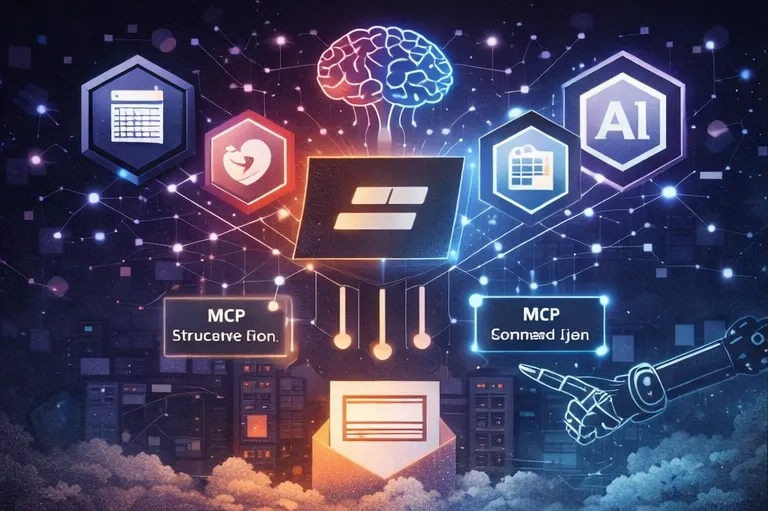
Most platforms today are retrofitting AI features. EmDash builds around them.
Every instance includes tools designed for machine interaction: a built-in MCP server, a command-line interface, and structured “Agent Skills” documentation that helps AI systems understand and modify the CMS autonomously.
Even its content model reflects this shift. Structured JSON replaces loosely defined content blobs, making it easier for AI agents to parse, transform, and reuse data.
There’s also an early signal of where monetization might go: support for HTTP-native micropayments, allowing machines—not just humans—to pay for content access.
This is less about features and more about positioning. EmDash assumes a future where machines are first-class users of the web.
Migration Without Reinvention
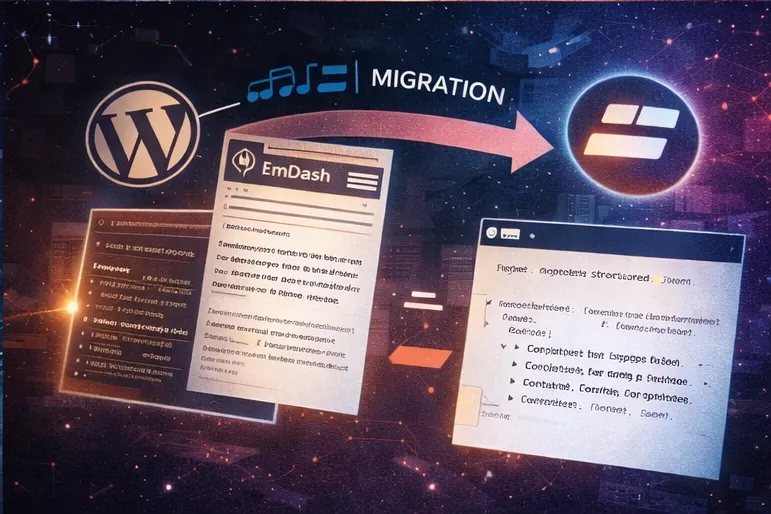
Despite its forward-looking design, EmDash doesn’t ignore the present.
It includes a migration path from WordPress, supporting content imports via standard export formats and mapping them into its structured schema.
That’s a pragmatic move. Any credible challenger to WordPress has to meet users where they are before pulling them somewhere new.
The Pushback: Ecosystem vs. Architecture
If EmDash’s architecture earns respect, its adoption story is far less certain.
WordPress’s real strength isn’t just its code—it’s its ecosystem: tens of thousands of plugins, a massive developer base, and decades of accumulated trust.
EmDash starts with none of that.
Early reactions reflect this tension. Many developers agree the technical direction is sound, even overdue. But a CMS isn’t judged by architecture alone—it’s judged by what people can build with it.
And right now, that answer is: not much, yet.
Even WordPress co-founder Matt Mullenweg acknowledged the engineering quality while questioning the framing. His critique cuts to the heart of the issue: WordPress’s defining feature is its portability and openness, while EmDash may be tightly coupled to Cloudflare’s ecosystem.
That’s not a flaw—but it is a strategic choice.
Right Architecture, Empty Ecosystem
That phrase captures the current state of EmDash better than any headline.
Technically, it aligns with where the web is going: secure by default, serverless-first, AI-native, and developer-centric.
But ecosystems don’t emerge from architecture alone. They take time, incentives, and community momentum.
EmDash has the foundation. What it doesn’t yet have is gravity.
The Real Question
EmDash doesn’t need to replace WordPress to matter.
If anything, its biggest impact may be indirect—forcing the CMS landscape to confront assumptions that have gone unchallenged for years.
The real question isn’t whether EmDash becomes the next WordPress.
It’s whether it signals what the next generation of CMS platforms will look like—and whether others follow its lead.
If you’re curious how EmDash actually works in practice, start with this beginner-friendly breakdown.