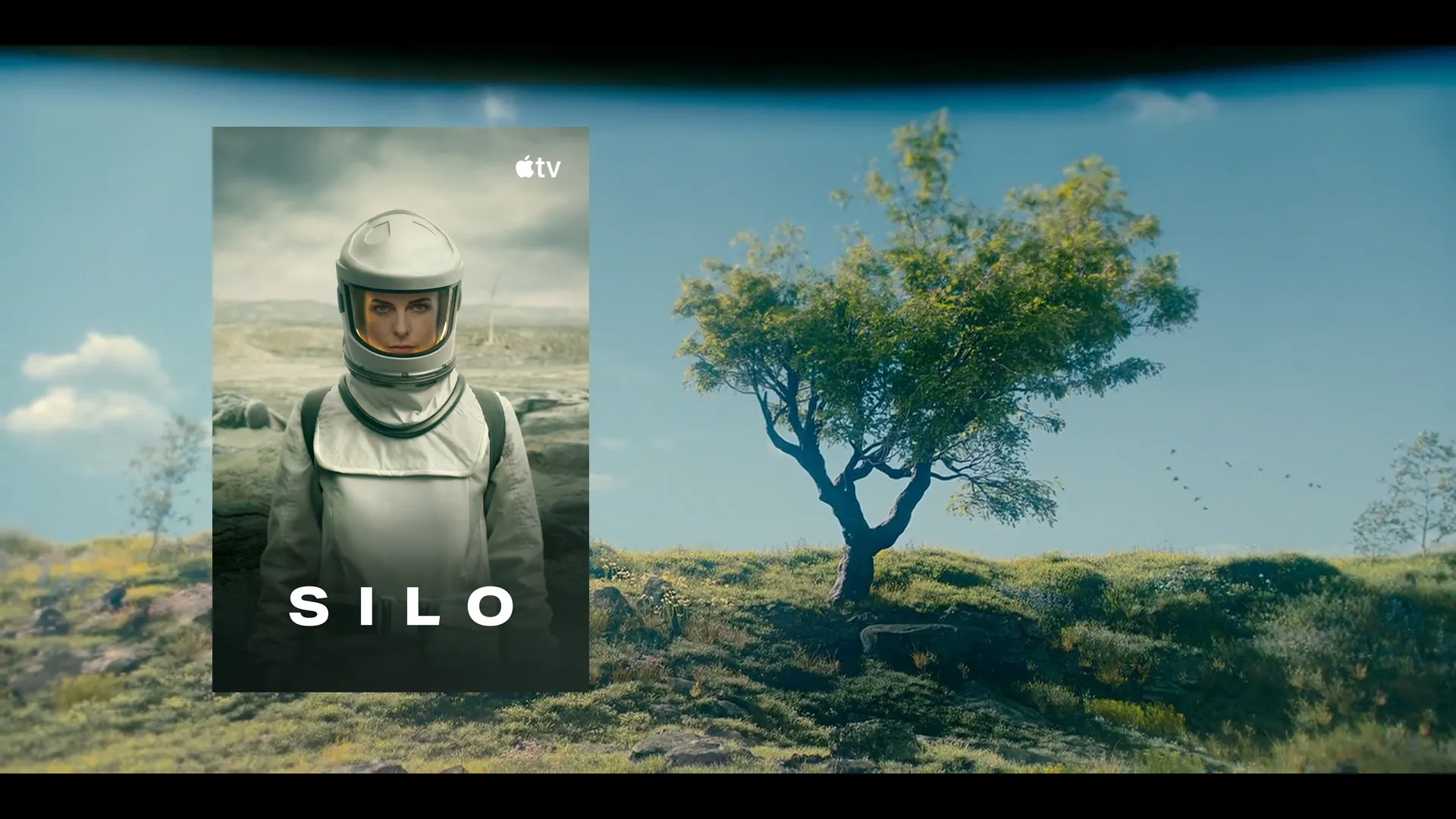
Spoilers for Season 1 of Apple TV+’s Silo.
The greatest threat to the Silo may not have been the poisonous world outside.
It may have been the lie about it.
For generations, the people living inside the Silo were taught a simple truth: the world outside was dead, toxic and uninhabitable. They could see it every day on the enormous screen in the cafeteria. The landscape was gray and lifeless. Nothing moved. Nothing grew.
And, apparently, that arrangement worked.
People stayed inside. They built families, went to work, raised children and lived ordinary lives in an extraordinary underground prison. They might have wondered about the past, but the basic rule was clear: outside is deadly, inside is home.
Then the Silo introduced—or maintained—one of the strangest parts of its entire system.
The Cleaning.
Whenever someone voluntarily requested to go outside, they were sent out in a protective suit and given a piece of wool with which to clean the external camera. Almost every person who went outside eventually did exactly that.
But why?
The answer revealed in the first season of Silo is ingenious—and, at the same time, arguably the biggest strategic mistake the Silo’s rulers ever made.
The helmet shows the person outside a beautiful green world.
Blue sky. Green grass. Trees. Birds.
A world that appears alive and habitable.
The person therefore assumes that the people inside have been lied to. They believe the cafeteria screen is dirty or malfunctioning. They think they have finally discovered the truth.
So they clean the camera. And that is precisely what the Silo’s system wants them to do.
But there is a problem. They didn’t need to lie.
The Silo created a conspiracy where none was necessary
Imagine the Silo had simply told the truth.
Imagine the helmet showed exactly what was actually outside.
A barren landscape. A toxic atmosphere. A dead civilization. Perhaps distant ruins. Perhaps nothing but dust.
A person sent outside would see exactly what everyone inside had already been seeing for generations.
What would they have to clean? Nothing.
What secret would they discover? Nothing.
What conspiracy would they uncover? Nothing.
They would simply walk outside, look around and eventually die from the poisonous atmosphere.
The people inside would watch it happen and receive confirmation of what they already believed.
The system would remain stable.
Instead, the Silo chose to manufacture a completely different reality for the person wearing the helmet.
And that decision created a psychological trap that ultimately helped destabilize the entire society.
Allison Becker is the perfect example
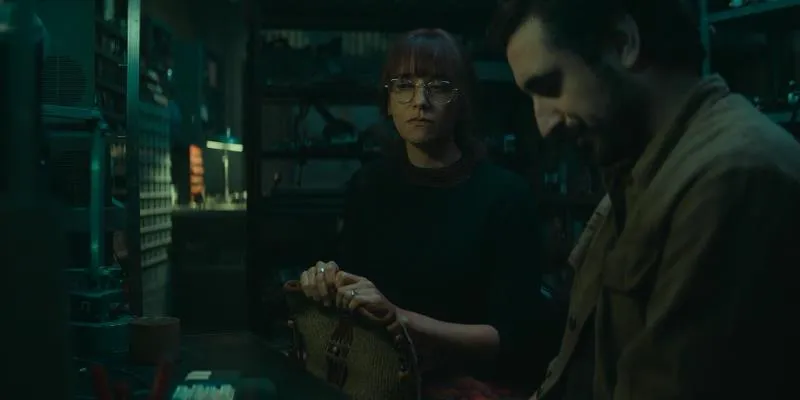
This is where the decision to deceive becomes especially destructive.
Allison Becker doesn’t randomly wake up one morning and decide that the Silo is a lie. She is already becoming suspicious because of several things happening around her.
Then she and George Wilkins access the forbidden hard drive.
Among the files they discover is a recording associated with a previous Cleaning—Jane Carmody’s cleaning.
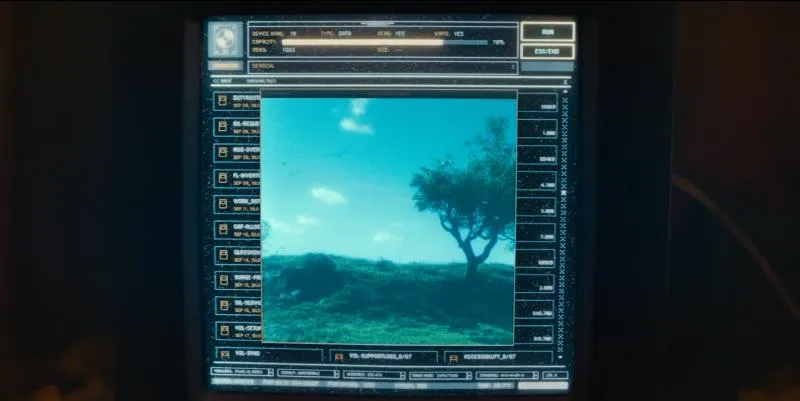
The recording appears to show a beautiful, green outside world.
For Allison, this is explosive evidence. She already suspects that something is wrong. Now she has apparently seen proof.
The result is predictable. She begins believing that the Silo’s official version of reality is false, and she wants to go outside.
But here’s the irony:
The evidence that convinces Allison that the Silo is lying is itself part of the Silo’s deception.
The rulers have effectively created the evidence that will eventually be used against them.
That’s a spectacular own goal.
What if the green video had never existed?
Allison would have no reason to conclude:
“The outside is safe and the Silo is lying to us.”
And therefore she might never make the decision that ultimately sets the chain of events in motion.
George might survive. Holston might never decide to follow Allison. Juliette might never become entangled in the mystery.
The hard drive might never become the center of a conflict between the citizens and the authorities.
The Silo might continue functioning exactly as it had for generations.
Of course, this is hypothetical. The series gives us enough information to make the argument compelling, but it does not explicitly say that removing the green feed would have prevented every later event.
Nevertheless, the causal connection is difficult to ignore.
The fake green world transforms suspicion into conviction.
But why did the Silo need the green screen?
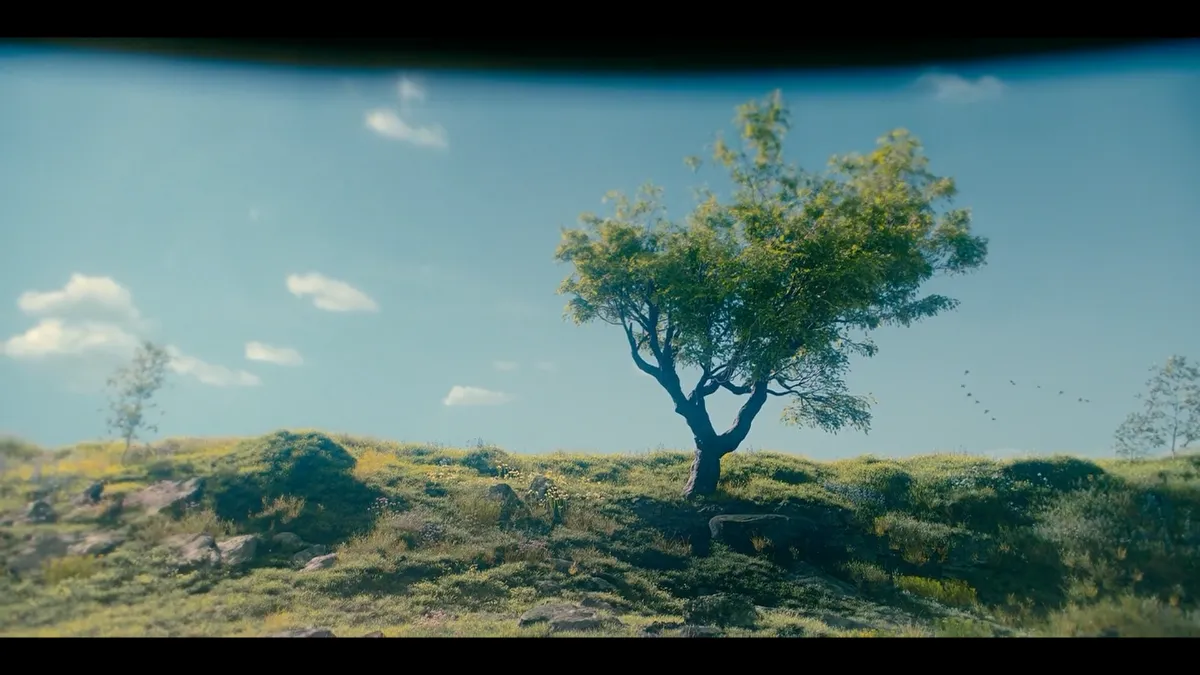
This is where the defenders of the Silo’s system have their strongest argument.
The purpose was presumably to make people clean. The Silo needs its external sensor to remain usable. The residents inside need to see the outside. And someone has to clean the camera. So the architects of the system came up with a clever psychological trick:
Show the cleaner a beautiful world.
The cleaner assumes the camera is dirty. The cleaner wipes it. The people inside see the same barren world afterward. The cleaner dies. The people inside conclude once again that the outside is deadly.
From the perspective of someone designing a dystopian control system, this is actually quite clever. But there is a glaring question.
Why not simply build a windshield wiper?
A windshield wiper could have solved the entire problem
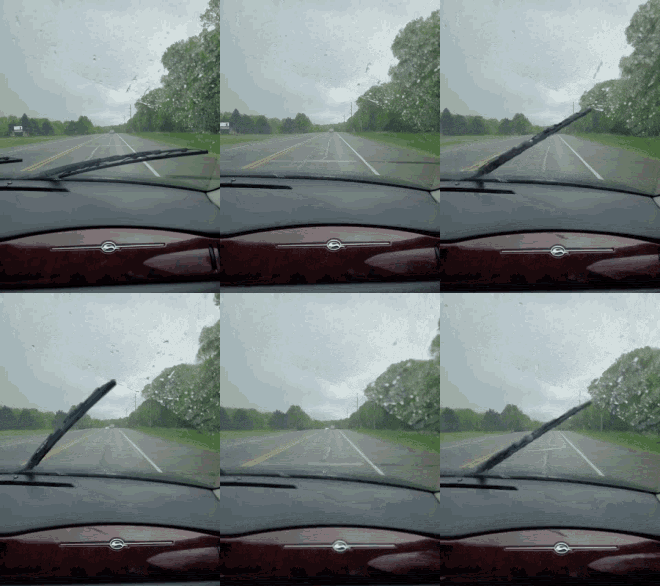
This might sound almost comically simple. But that is precisely why it is such an interesting criticism of the Silo’s system.
The external camera needs cleaning. Fine. Install a mechanical wiper. Put a small motor on it. Schedule it to activate periodically. Use a replaceable blade. Add a cleaning mechanism. Use a transparent protective cover.
There are countless technological solutions to keeping a camera lens clean.
The Silo is an enormous underground civilization capable of maintaining sophisticated life-support systems, surveillance networks, elevators, industrial machinery and highly advanced technology. Yet somehow its solution to a dirty camera is:
Send a human being outside to wipe it with wool.
And when that person goes outside, show them a fake paradise so they will be motivated to do it.
That is an astonishingly complicated solution to a relatively simple engineering problem. And it creates an enormous political risk.
The Silo traded engineering for psychological manipulation
This is the deeper problem. The authorities didn’t simply solve a maintenance problem.
They turned maintenance into a ritual. Then they turned the ritual into punishment. Then they turned punishment into propaganda. And finally, they turned propaganda into the seed of rebellion.
Think about the chain:
Dirty camera → Cleaning → fake green world → suspicion → forbidden investigation → hard drive → rebellion → instability.
The original problem was a dirty camera. The solution became a civilization-wide conspiracy. That’s a terrible trade.
A simple mechanical device could potentially have eliminated the need for the entire deception. Instead, the Silo made the Cleaning one of the most psychologically powerful events in its society.
Juliette exposes the flaw
The genius of Juliette is that she doesn’t merely discover the deception. She understands how the deception works. When Juliette goes outside, she sees the same beautiful world. But something doesn’t feel right.
She remembers the recording from the hard drive. Then she notices the birds. They are flying in the same pattern. The same birds. The same movement. The same visual world.That’s when she understands.
The display is a lie.
She realizes that the beautiful landscape is not the world outside at all. It is an artificial image being shown through the helmet. The real landscape is the barren wasteland that the people inside have been seeing all along.
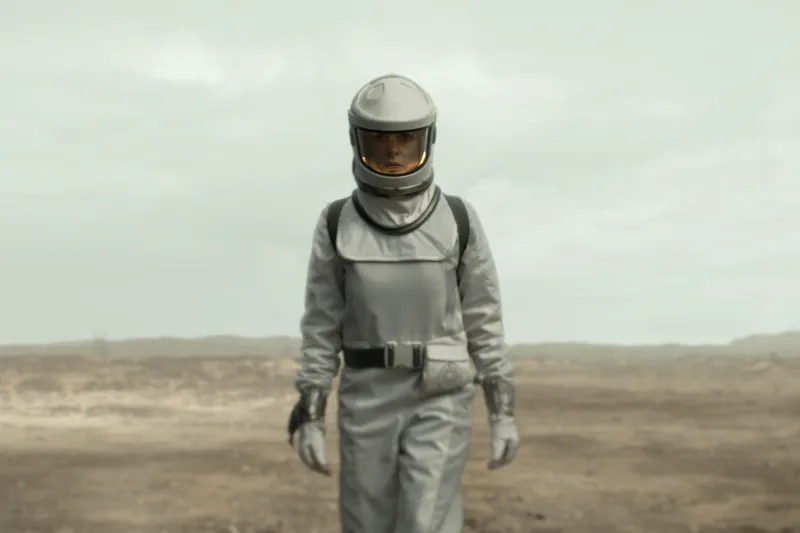
And then she does something no previous cleaner had done. She refuses to clean. That single decision breaks the system. The entire mechanism depended on one predictable human reaction:
“They can’t see what I’m seeing. I need to clean the camera so they can see it too.”
Juliette doesn’t fall for it. And once she doesn’t clean, the psychological machinery of the Silo starts to collapse.
The tragedy is that the Silo could have been more honest
This is why the green world is, in my view, one of the most fascinating flaws in the Silo’s entire political system.
The Silo didn’t necessarily need to tell people everything. It didn’t need to reveal every secret about the past. It didn’t need to explain the Rebellion. It didn’t need to show them the other Silos. It didn’t even necessarily need to tell everyone exactly why the outside world had become toxic.
But it could have been honest about one simple fact:
The outside is currently uninhabitable.
If that had been the accepted truth, people could have built their lives around it. They could have lived inside peacefully. They could have hoped that one day the outside environment would recover. They could have dreamed about a future in which their descendants might walk freely beneath the sky.
Hope doesn’t necessarily require deception. In fact, honest hope may have been far more stable than manufactured hope.
The Silo could have given people something to live for
Imagine if children in the Silo grew up hearing:
“The outside world is dangerous today. But perhaps someday it won’t be.”
Imagine scientists studying the atmosphere. Engineers working on purification systems. Biologists researching whether plants could eventually survive.
Generations of people working toward one goal:
Make Earth habitable again.
That could have created a completely different society.
Instead of asking, “What are they hiding from us?”, people might ask:
“How can we make the outside safe?”
Instead of rebellion, there could have been research. Instead of conspiracy, there could have been cooperation. Instead of fear of the outside, there could have been a long-term dream of returning to it.
The Silo’s rulers may have believed that absolute secrecy was necessary for survival. But perhaps they created the instability they were trying to prevent.
The irony of the Cleaning
There is a beautiful irony at the center of Silo. The Cleaning is supposed to reinforce the Silo’s belief system. Someone goes outside. They clean the camera. They die.
Everyone inside sees the death. And everyone concludes: “The outside is deadly.”
But the very mechanism designed to reinforce that belief eventually becomes the mechanism that destroys it.
Because every Cleaning leaves behind questions.
Why did they clean? What did they see? Why did they behave that way? Why does the same green landscape appear in old recordings? Why is the person so determined to show it to everyone?
And eventually: Why is the helmet showing something different from the cafeteria screen?
The Silo created a ritual intended to suppress curiosity. Instead, it created the ultimate mystery.
A better system would have been boring
And perhaps that’s the funniest part. The best solution to the Silo’s Cleaning problem would have been incredibly boring.
No fake paradise. No psychological manipulation. No wool. No elaborate ritual. No dead cleaners. No mysterious final moments.
Just:
Wiper → camera clean → residents see outside → everyone goes back to work.
Boring. And boring might have saved the Silo.
Because the Silo’s real problem wasn’t that people couldn’t clean the camera.
Its real problem was that its leaders were so obsessed with controlling what people believed that they turned a simple maintenance task into an elaborate deception.
And deception has a cost.
The green world started the chain reaction
The green world acted as an accelerant. It transformed doubt into certainty. It transformed suspicion into action.
It transformed Allison Becker’s curiosity into a desire to leave.
It helped convince Holston that Allison might have been right.
It became part of the mystery surrounding George Wilkins and the hard drive.
It eventually brought Juliette into the same investigation.
And when Juliette finally understood the trick, she didn’t play her assigned role.She didn’t clean. She walked past the camera.
And for the first time, someone from the Silo saw what lay beyond the carefully controlled boundaries of the system.
Not a green paradise. Not the simple dead landscape displayed inside. But something much bigger.
Other Silos.
The lie that was supposed to keep people safely inside had instead helped reveal that they were not alone.
The real lesson of the Silo
The Silo’s leaders wanted to solve one problem: How do we make people clean the camera?
Their answer was: Lie to them.
But they failed to ask a more important question: What happens when people discover the lie?
That is where the entire system becomes unstable.
Perhaps the greatest mistake the Silo made wasn’t building underground. It wasn’t even hiding the truth about the past.
It was believing that people could be controlled indefinitely through carefully manufactured realities.
Because once a person discovers that reality has been manipulated, they don’t simply stop believing one particular story. They start questioning everything. And that is exactly what happens in Silo.
The green world was supposed to make cleaners pick up the wool. Instead, it made people pick up the truth.
If the Silo had simply shown cleaners the same dead world everyone else saw, perhaps there would have been no Cleaning mystery, no apparent proof of a habitable Earth, and no Allison Becker staring at a screen and thinking that her entire civilization had been lying to her.
The Silo may have needed a way to clean its camera. But it didn’t need a lie. And that may have been the beginning of the end.