We imagine radiation as something distant and dramatic.
A glowing wasteland. A forbidden city. A place stamped with warning signs and sealed off from human life.
Maybe somewhere like the Chernobyl Exclusion Zone—a name that has become synonymous with danger.
But what if the most radioactive place you regularly encounter isn’t a place at all?
What if it’s something far closer… something human?
The Radiation We Eat Without Thinking
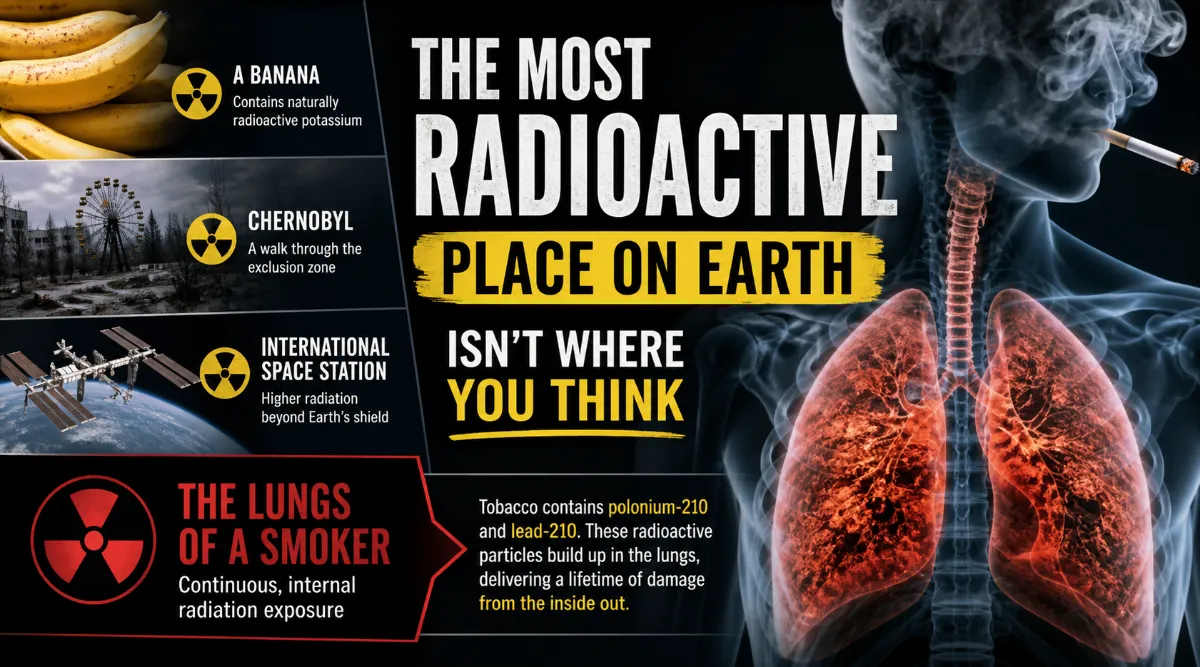
Let’s begin with something completely harmless: a banana.
Yes, a banana.
Bananas contain a naturally occurring isotope called potassium-40. That means every time you eat one, you’re exposing yourself to a tiny amount of radiation.
It sounds alarming until you realize something important:
your body is already radioactive.
The human body contains trace amounts of radioactive elements. So do the air, the soil, and even the water around you.
Radiation, in small doses, isn’t unusual. It’s part of the background noise of existence.
To make this easier to understand, scientists sometimes use a quirky unit called the banana equivalent dose—a playful way to compare radiation exposure in everyday terms.
Eating a banana won’t harm you. You’d need to consume millions at once to reach dangerous levels, and even that is more theoretical than practical.
So clearly, bananas are not the problem. Every food contains a little amount of radiation.
But they are the beginning of a much bigger story.
The Place We Fear the Most
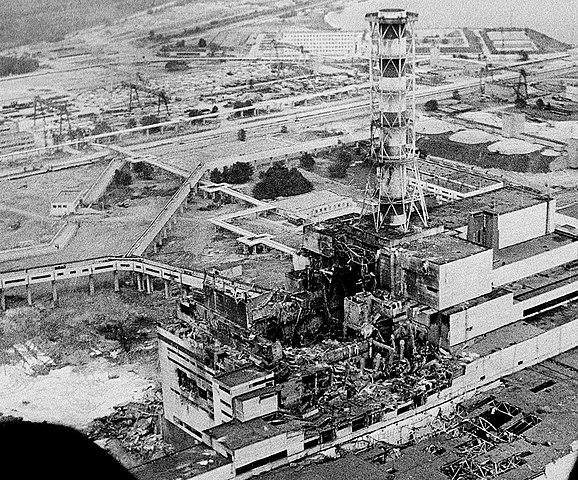
When people think of radiation, one place dominates the imagination: Chernobyl.
In 1986, a nuclear reactor exploded, releasing massive amounts of radioactive material into the environment. The disaster forced thousands to evacuate and left behind a ghost city frozen in time.
Today, however, the story is more nuanced.
Visitors can now take guided tours through parts of the exclusion zone. With proper precautions, the radiation exposure from a short visit is surprisingly low—often comparable to what you’d receive during a long flight.
It’s still dangerous in certain areas, but it’s not the constant, overwhelming threat people imagine.
The lesson here is subtle but powerful:
what looks terrifying isn’t always the most dangerous thing.
Above the Earth, Beyond Protection
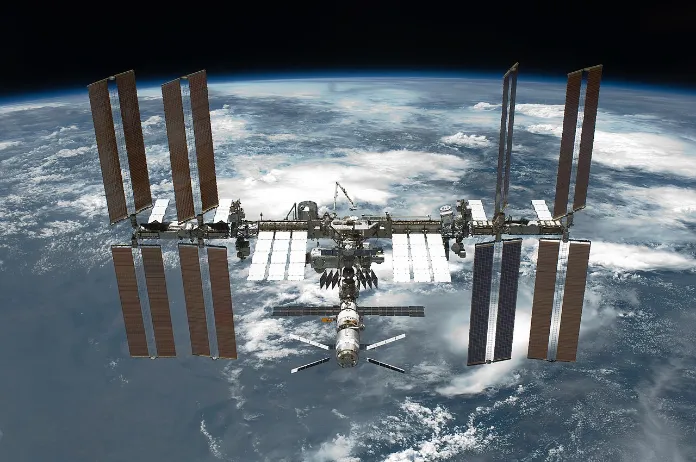
Now let’s leave Earth entirely.
High above the planet, orbiting at incredible speed, is the International Space Station.
Astronauts aboard the ISS are exposed to significantly higher levels of radiation than people on Earth. That’s because they are outside much of Earth’s protective atmosphere and magnetic field.
In space, cosmic radiation becomes a constant companion.
Spending months aboard the station increases an astronaut’s lifetime radiation exposure in a measurable way. It’s one of the hidden costs of space exploration—an invisible risk carried by those who venture beyond our planet.
So now we’ve moved from bananas… to nuclear disaster zones… to outer space.
Surely, the most radioactive environment must be somewhere along this spectrum.
But it isn’t.
The Unexpected Answer
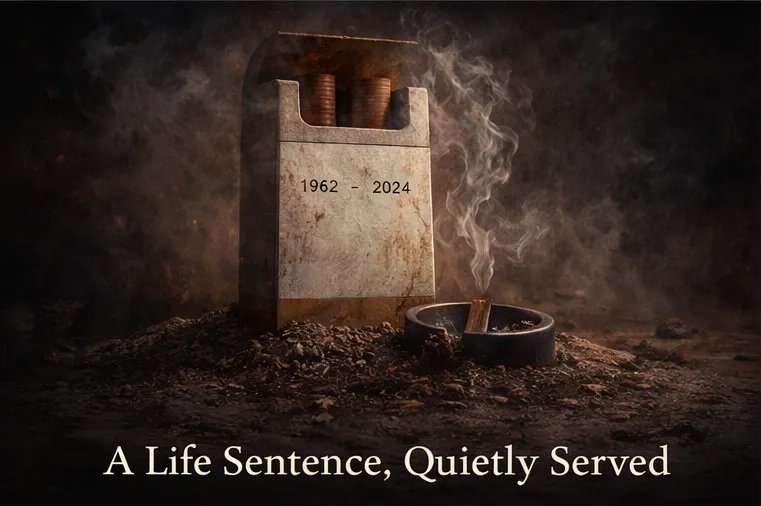
The most radioactive place in this entire comparison isn’t a place at all.
It’s the lungs of a smoker.
This isn’t metaphorical. It’s literal.
Tobacco plants absorb radioactive elements from the soil, including-
- polonium-210 and
- lead-210
When tobacco is processed and smoked, these particles are inhaled directly into the lungs.
Once inside, they don’t just pass through.
They settle.
They accumulate.
And with repeated smoking, they deliver a continuous dose of radiation directly to lung tissue.
Unlike the radiation from a banana or even a brief visit to Chernobyl, this exposure is:
- Internal
- Persistent
- Concentrated in one of the body’s most sensitive organs
Over time, this creates a damaging environment at the cellular level, contributing to mutations and significantly increasing the risk of cancer.
The Illusion of Danger
What makes this realization so striking is how it challenges our instincts.
We fear the dramatic.
We imagine danger as something external—something we can see, avoid, or escape.
A nuclear zone. A radioactive wasteland. The vacuum of space.
But the truth is often quieter.
More familiar.
More personal.
The radiation that does the most harm isn’t necessarily the most intense. It’s the most consistent. The most intimate. The one that stays with you.
Rethinking What “Dangerous” Means
This isn’t just a story about radiation.
It’s a story about perception.
We tend to overestimate rare, dramatic risks and underestimate the slow, everyday ones. The things we choose. The habits we build. The exposures we normalize.
A banana feels harmless—because it is.
Chernobyl feels terrifying—though it’s more controlled than we imagine.
Space feels extreme—and it is, but only for a select few.
But smoking? That’s a personal decision with invisible consequences, repeated daily, accumulating silently.
Read The Strongest Prison Humans Ever Created.
The Final Thought
If you were asked to name the most radioactive place on Earth, your mind would probably travel far away—to disaster zones, to laboratories, to places marked on maps.
It wouldn’t look inward.
And yet, sometimes the most dangerous environments aren’t locations.
They’re conditions.
They’re choices.
They’re things we carry with us.
And that’s what makes this realization so powerful—and so unsettling.