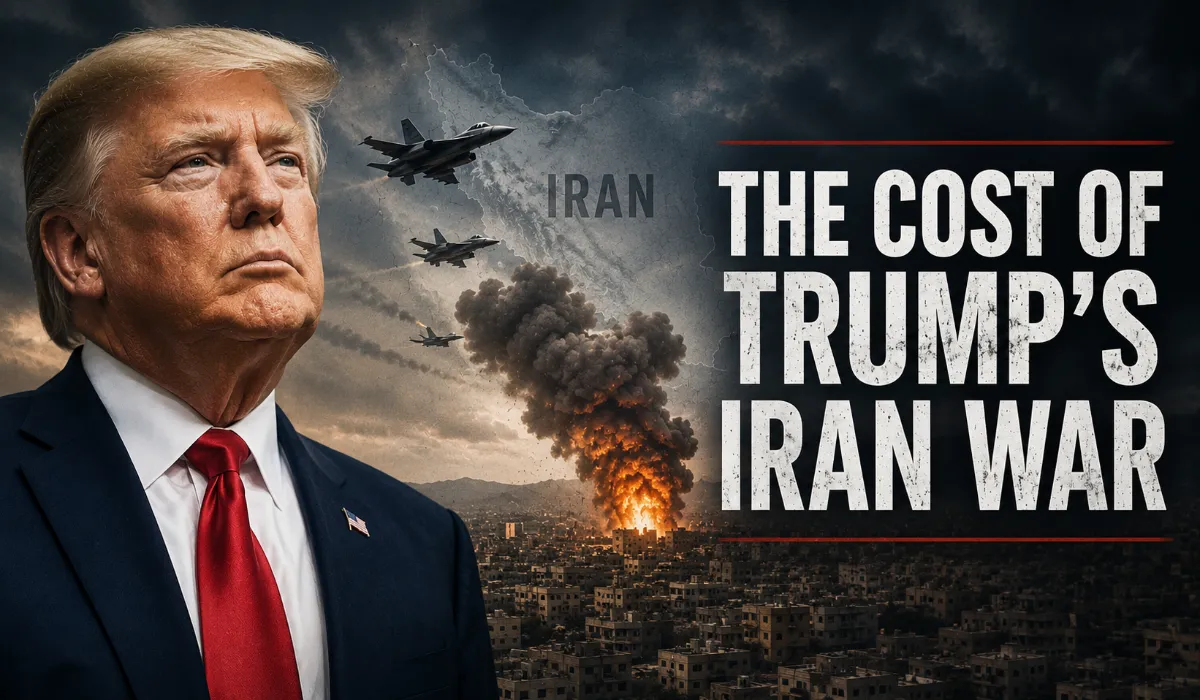
Donald Trump entered the White House promising to keep America out of costly foreign wars. Yet just months into his new term, he found himself overseeing one of the most consequential military confrontations in the Middle East in years.
While the guns may be falling silent and diplomats are attempting to secure a lasting peace, the political fallout from the Iran conflict is only beginning. And for Trump, the true cost of the war may not be measured in dollars or military hardware, but in public trust.
A President Who Promised “No More Endless Wars”
One of Trump’s strongest political advantages has long been his image as a leader willing to challenge the foreign policy establishment. Throughout his political career, he repeatedly criticized previous administrations for dragging the United States into expensive and prolonged conflicts overseas.
That message resonated with millions of Americans exhausted by decades of military interventions in Iraq and Afghanistan.
But the conflict with Iran placed Trump in an uncomfortable position. Instead of remaining the outsider criticizing wars, he suddenly became the commander-in-chief responsible for launching and managing one.
For many voters, particularly those within Trump’s own political coalition, that represented a significant shift.
The $40 Billion Price Tag — and Why It Doesn’t End There
Early estimates place the direct military cost of the Iran conflict at around $40 billion, covering operations, deployments, munitions, and logistics during the active phase of the war.
But that figure represents only the most immediate expenses.
The true cost is expected to rise once longer-term military and economic obligations are included. These typically involve replacing expended weapons systems, repairing equipment, maintaining a heightened military presence in the region, and long-term care for wounded service members.
Historically, the full financial burden of U.S. military operations tends to unfold over years rather than months. As a result, analysts caution that the final cost of the Iran conflict could be significantly higher than the initial $40 billion estimate once all related spending is accounted for.
A Divided Republican Base
Perhaps the most surprising consequence of the war has been the divisions it exposed within Trump’s own support base.
Recent polling indicates that while many Republicans support ending the conflict, a substantial portion of Trump’s core supporters remain divided over whether the war achieved enough to justify its costs. Some view the eventual agreement with Iran as a pragmatic effort to end hostilities, while others believe the administration conceded too much in exchange for peace.
This internal disagreement highlights a broader challenge for Trump.
For years, he cultivated a movement skeptical of foreign intervention. Any perception that his administration abandoned those principles could weaken enthusiasm among some of his most loyal supporters.
Critics From Both Parties
The political pressure has not come solely from Democrats.
Prominent voices from both parties have criticized aspects of the administration’s handling of the conflict and subsequent negotiations. Critics argue that the military campaign imposed enormous costs while failing to fundamentally transform Iran’s strategic position. Others contend that the diplomatic concessions offered during peace talks risk undermining America’s leverage.
Supporters of the administration, however, argue that military pressure forced Tehran back to the negotiating table and created an opportunity for a more durable settlement. Vice President JD Vance has described recent negotiations as laying a strong foundation for a permanent agreement.
Whether voters ultimately accept that argument remains uncertain.
The Bigger Question: Was It Worth It?
History often judges wars not by how they begin, but by what they achieve.
If the emerging diplomatic framework leads to lasting stability, open shipping lanes, and stronger security arrangements in the region, the administration may eventually claim victory.
But if Iran rebuilds, regional tensions persist, or the economic pain continues, many Americans may conclude that the conflict extracted an enormous price for limited gains.
For Donald Trump, the political stakes could be immense.
The Iran conflict may not define his presidency solely through military outcomes. Instead, it could be remembered as the moment voters began asking a simple but powerful question:
Was the cost worth it?